FEATURE · FIRST AID AND BASIC LIFE SUPPORT
“Hey, Are You Okay? Can I Help?”: Future Law Enforcers Learn to Answer the First Call
Philippine Red Cross Lanao del Norte trainers bring Emergency First Aid and Basic Life Support lessons to 35 Criminology students at Ringia Hall, in an event organized by the PED017 class.
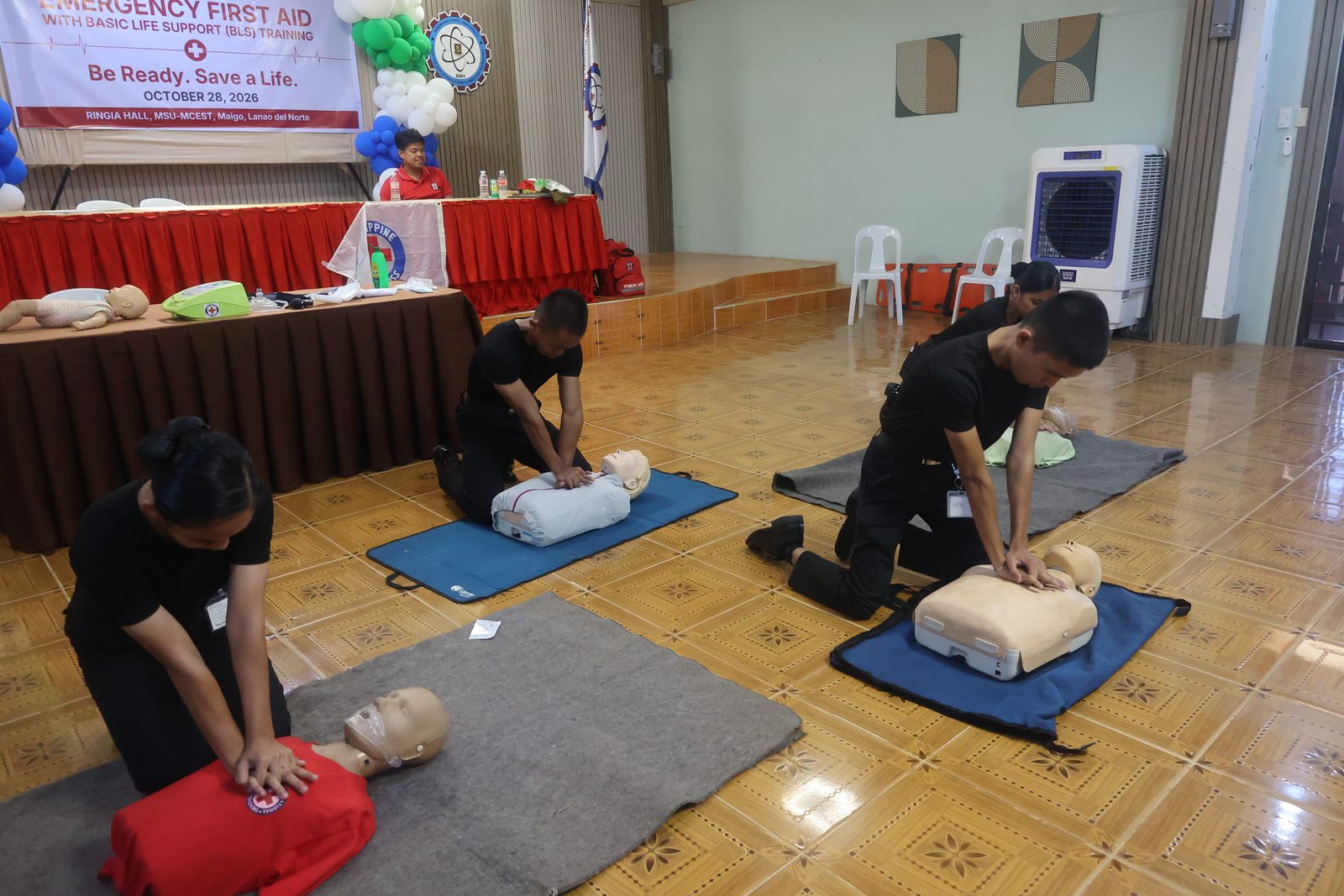
MAIGO, LANAO DEL NORTE — “Hey, hey, are you okay? Can I help?” Those are the first words a rescuer says, and on Wednesday, October 28, 2026, they were among the first lessons 35 Criminology students of Mindanao State University–Maigo College of Education, Science and Technology practiced at Ringia Hall.
The Emergency First Aid with Basic Life Support (BLS) Training was organized by the PED017 First Aid and Water Safety class under Dr. Oliver Gomez, PED017 professor, working with the Philippine Red Cross Lanao del Norte Chapter. Taking part were the 35 CJE 2 students of the class.
The two resource speakers split the day. Mr. Arnel E. Dinglasa, Officer In Charge of the Philippine Red Cross Lanao del Norte Chapter, handled the lectures, while Mr. Lord Regel Max S. Alviola of the chapter's Safety Service and Disaster Management Service led the demonstrations. Afterward, the PED017 students were asked in their class group chat which lines had stayed with them. Their answers shaped this story.
Lessons rooted in humanity
Mr. Dinglasa opened with an introduction to the Red Cross: its history, its seven Fundamental Principles — Humanity, Impartiality, Neutrality, Independence, Voluntary Service, Unity and Universality — and its services to communities.
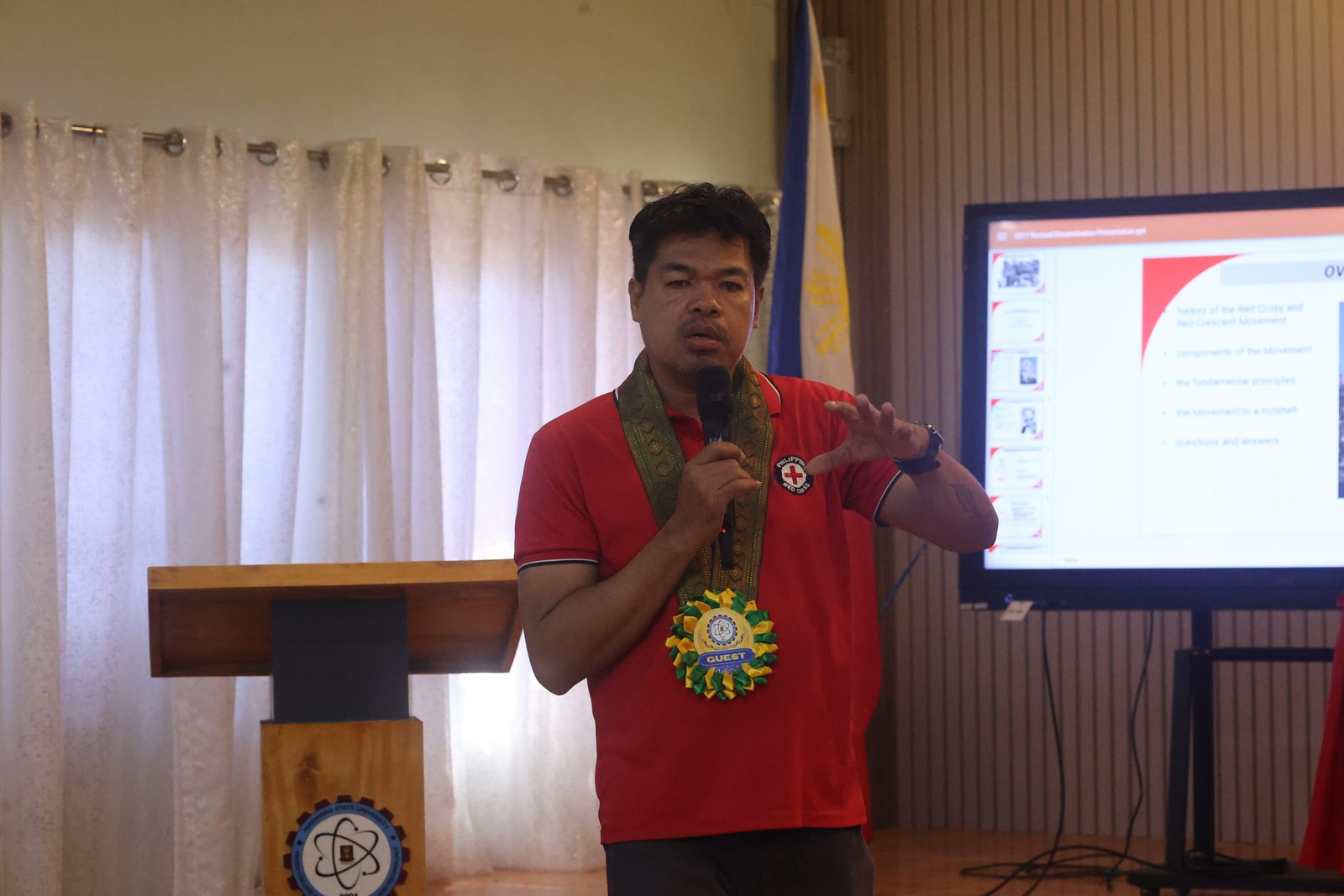
He also discussed International Humanitarian Law. “International Humanitarian Law says that even during war, there are rules that everyone must follow. People should not attack civilians, torture prisoners, or destroy places like hospitals and schools without military necessity,” Mr. Dinglasa told the students, a point Jamaloding Ampang Hadji Musa still remembered in detail.
Then came first aid itself. “First aid is the immediate care given to someone who is injured. Its purpose is to preserve life and prevent the condition from getting worse,” he explained.
Turning to cardiopulmonary resuscitation, Mr. Dinglasa told the students, “CPR is a combination of chest compressions and rescue breathing,” and that “CPR is performed to maintain life while waiting for the medical service to arrive.” He added that continuous chest compressions during CPR help deliver oxygen to the brain while waiting for the emergency medical team to arrive.
He also stressed why every second counts. Erl Lungay recalled the lesson in Bisaya: “4–6 minutes ma-daot na ang brain cells, maong nindot kung maka-provide ug CPR ASAP!” Within four to six minutes, brain cells begin to be damaged, so CPR should start as soon as possible.
From listening to doing
On the Ringia Hall stage, framed by balloon arches and the event banner, adult, child and infant CPR manikins were laid out for the hands-on segment led by Mr. Alviola.
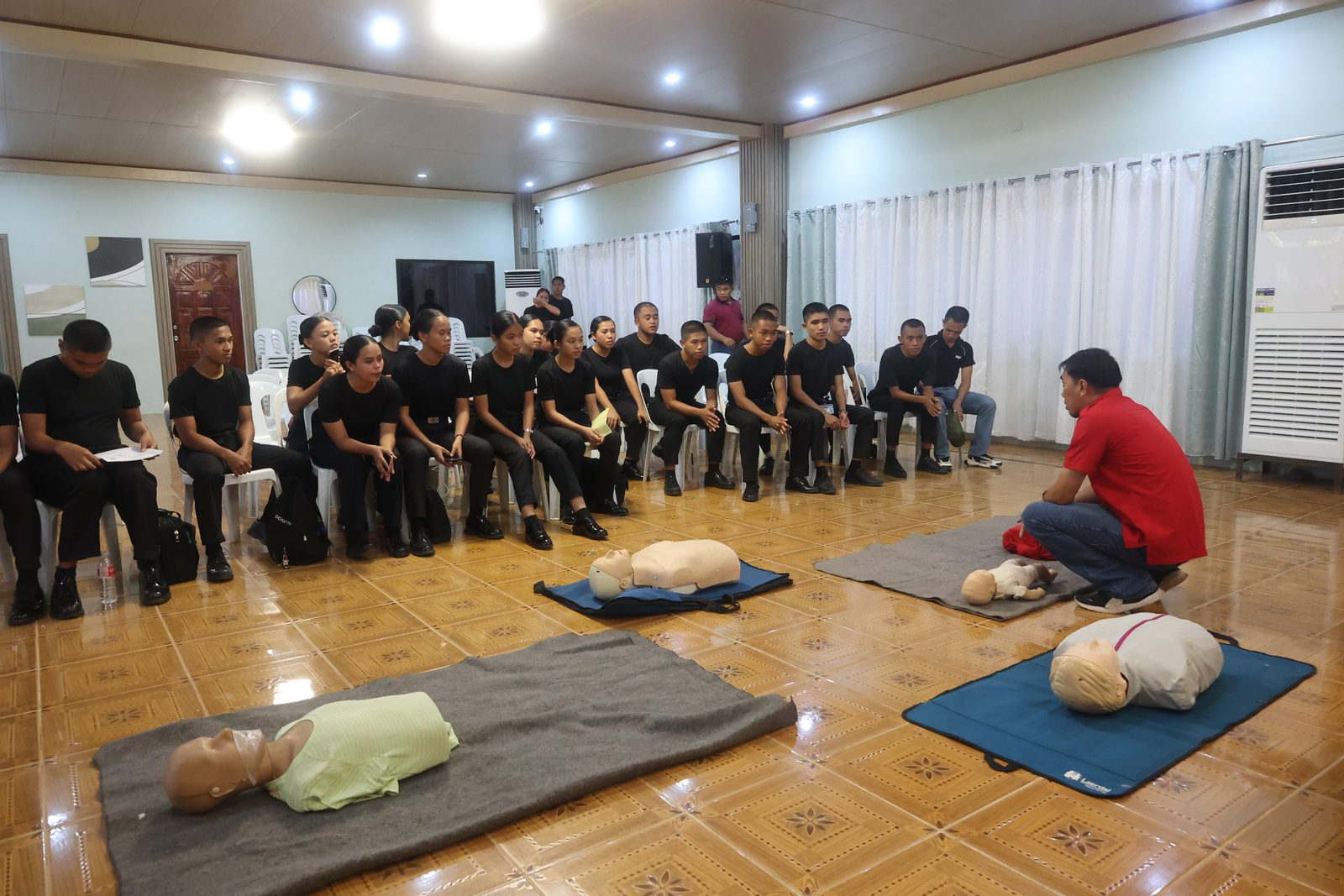
As he demonstrated, Mr. Alviola reminded the students that a rescuer's first move is not toward the victim. “Before you go to the victim, you need to check the area first, in 360 degrees,” he said. Only then does the rescuer approach and ask, “Hey, are you okay? Can I help?”
If there are bystanders, he told them, ask them to call an ambulance or 911 with a clear instruction: “Call 911 for an ambulance and come back again.”
“Always check the airway, breathing, circulation,” Mr. Alviola reminded them, showing how to look, listen and feel, and to check the pulse before starting CPR. For injuries, he walked them through the secondary check known by its capital letters, DOTS: “Look for Deformities, Open wounds, gently press for Tenderness, and look for Swelling.”
Push hard, push fast
Mr. Alviola then showed the CPR steps. “Before doing CPR, lay them flat on their back on a plain surface,” he said. Then: “Give 30 chest compressions followed by 2 rescue breaths,” and “push hard and fast, at least 2 inches or 5 to 6 cm deep.”
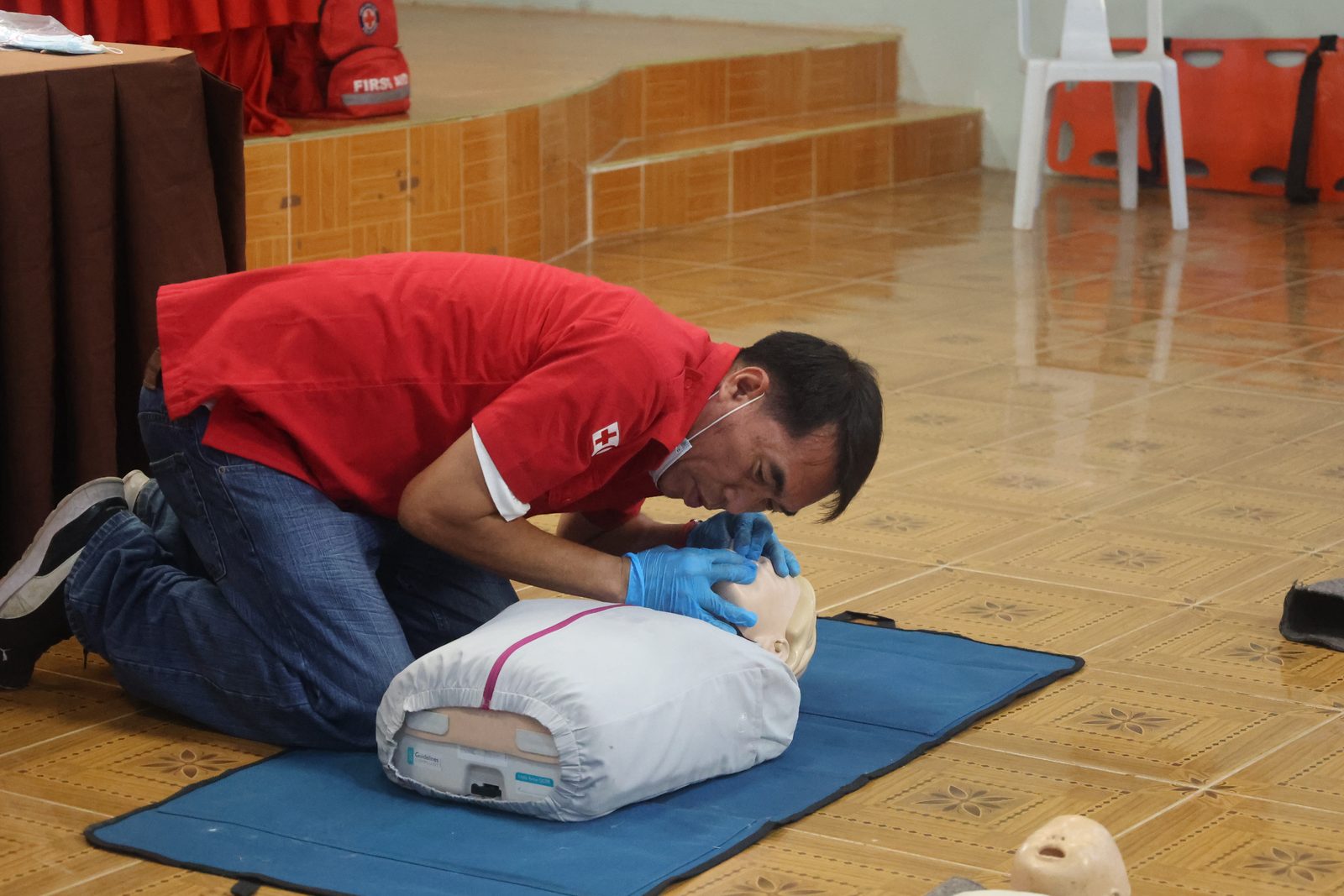
He also addressed the fear many first-time rescuers share. “Don't be scared to perform CPR. It's better to damage the rib cage, since it will just heal, than to have permanent damage in the brain. Just don't intentionally break it,” he told them. Criminology student Janssen Tiongco singled out that line when the class recalled the training.
And if the patient responds? “If the person wakes up or breathes normally, place them into the recovery position. Roll them onto their side with their top leg bent, and keep their airway clear while you monitor their breathing,” Mr. Alviola said as he showed the position. Then the students knelt on mats and took turns doing chest compressions on the manikins.
What stayed with them
Maynard Timagos remembered the opening question, “Hey, are you okay? Can I help?” Israel Zin Sabuero summed up the whole sequence in one line: “Check if the area is safe, check the patient, call for help, and give basic first aid like CPR.” Katrina Sanchez remembered how deep to push, and Nohrres Raine Pascua recalled the four-minute warning in Bisaya: “4 minutes lang ang kailangan para ma-damage ang utok sa victim.”
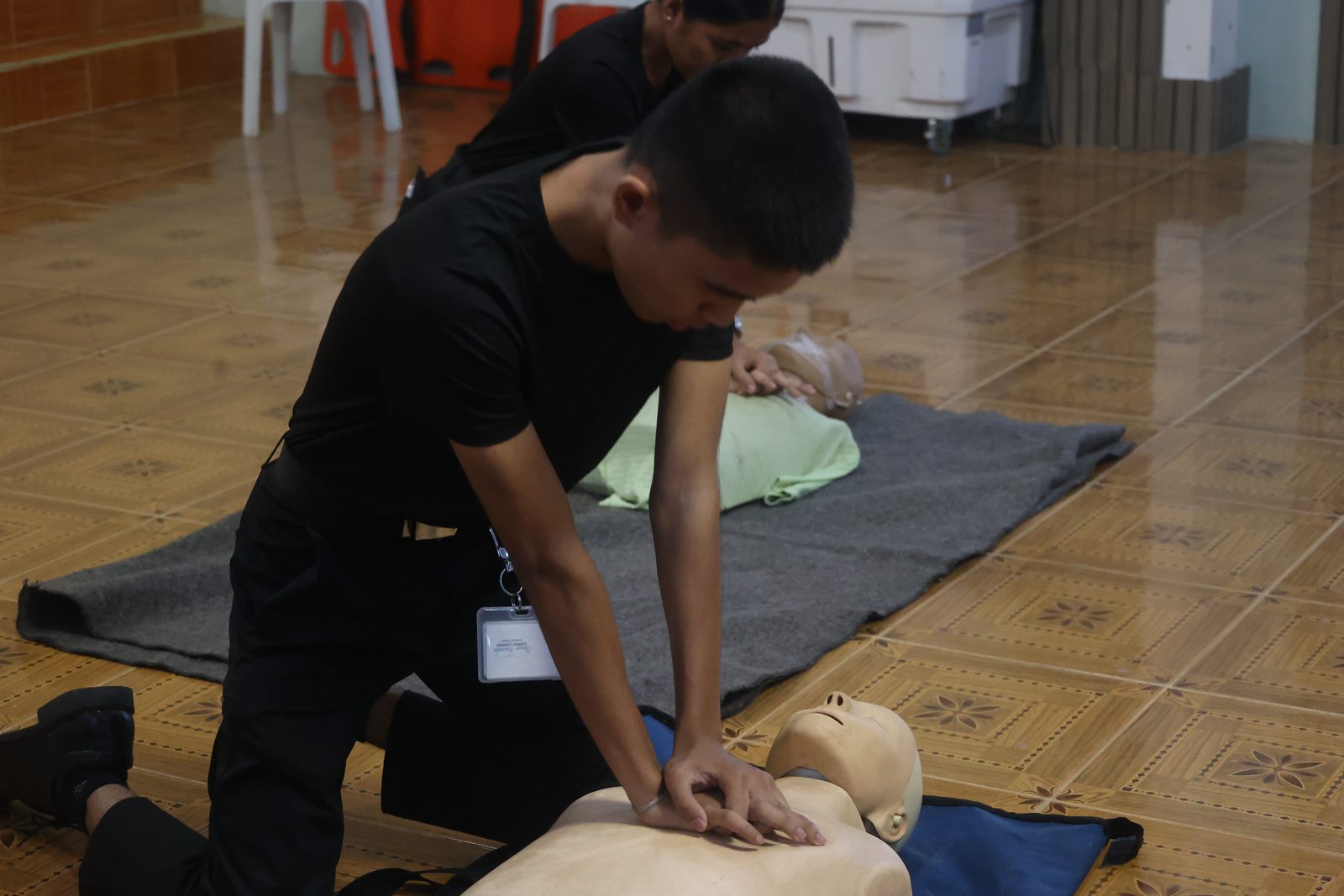
Ready for the moment
At the close of the program, certificates of participation were prepared for all 35 participants. Certificates of appreciation were given to Mr. Dinglasa and Mr. Alviola in recognition of their service as lecturer and demonstrator.
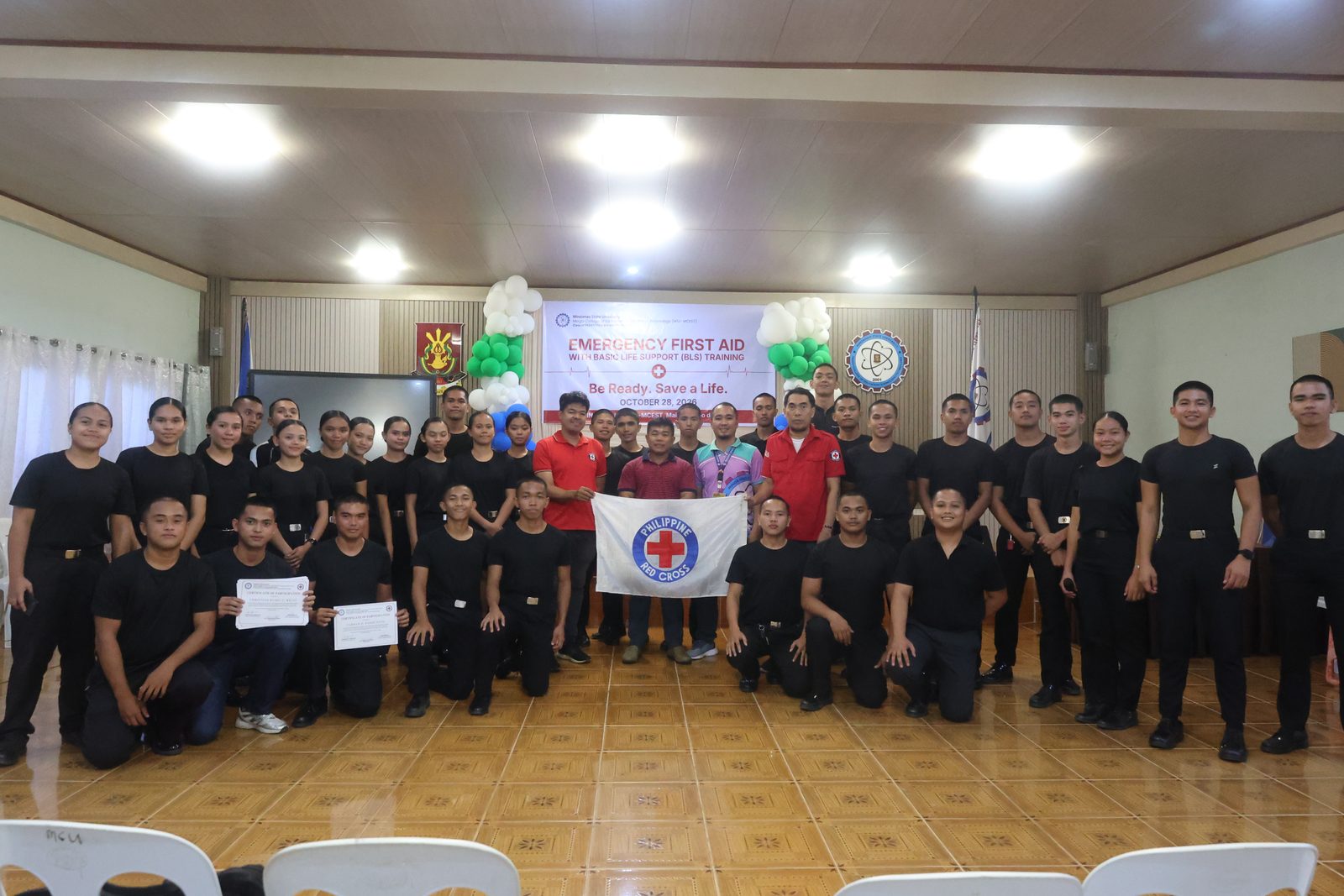
“I thank the Philippine Red Cross Lanao del Norte Chapter for responding to my request very quickly. Your willingness to share these life saving skills with our students means a great deal to MSU-MCEST,” said Dr. Gomez.
Someday, on patrol, at a checkpoint, at home or on campus, one of these 35 students may be the first to kneel beside someone who needs help and ask, “Are you okay? Can I help?” Thanks to the partnership between their PED017 class and the Red Cross, they will know what to do next.
As Christian Rusel Cellero Kilat put it in the class chat: “Learning has no limits.”